
1. We Listen to You
Tell us about your daily life, the conversations you struggle to follow, and what you’d like to hear more clearly.
How We Listen
Missing words or working harder to follow conversations? A personal hearing test helps you understand your hearing and explore what could help.

Your visit has four simple parts. None of them hurt, and you can ask questions at any time.
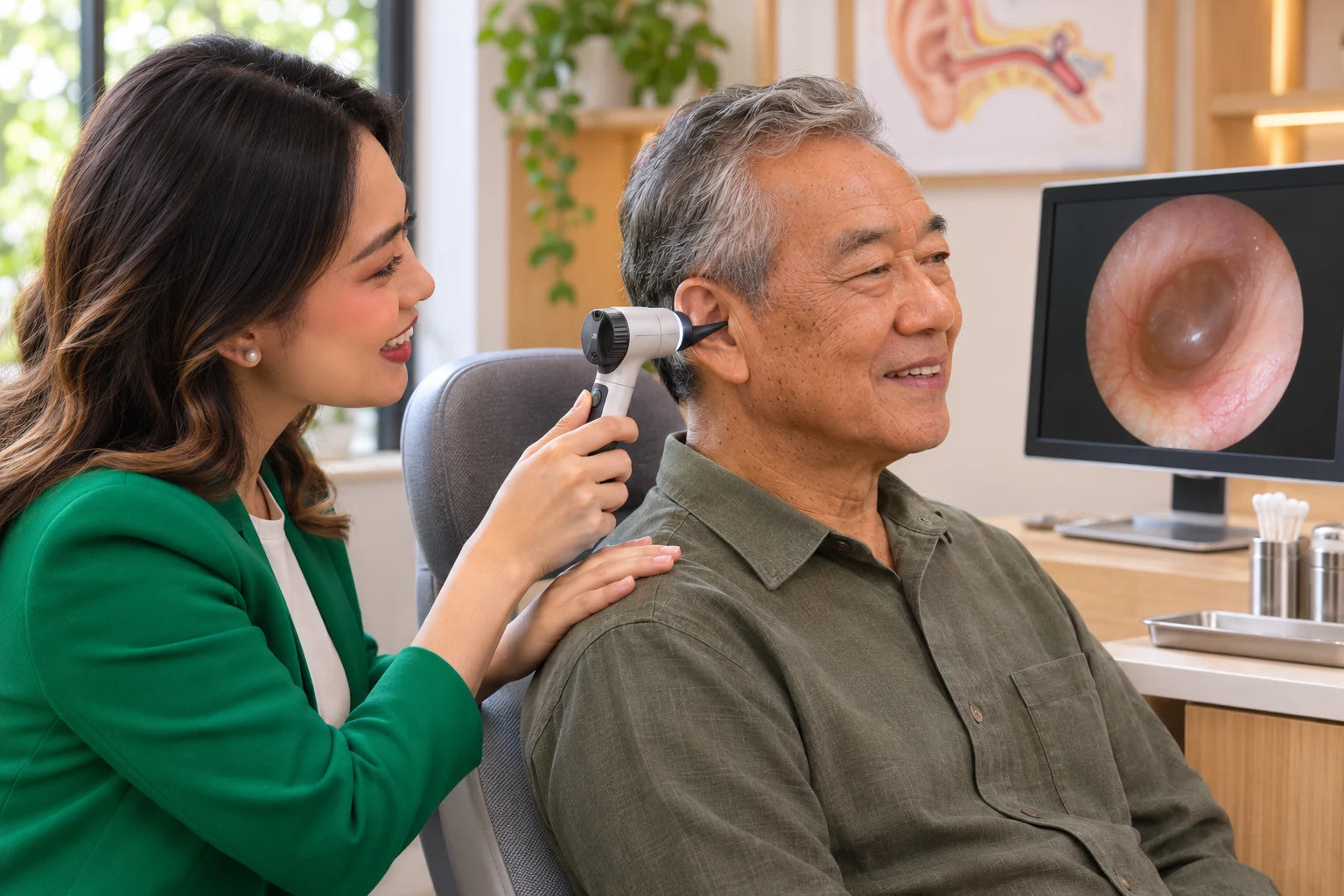
A tiny camera shows your ear canal and eardrum on a screen, so you see what we see.
You press a button whenever you hear a tone. We test two ways, and comparing them shows where the difficulty comes from.

You listen to words and repeat them. This shows how well you follow conversation.

Your hearing care professional explains your results in plain language. If hearing aids could help, we suggest what fits, and you choose.
We explain each part before it begins, so you know what to expect. The visit starts with a conversation about your hearing and the situations you find difficult.
You don’t need to practise or learn technical terms. Respond to what you hear and ask questions whenever you want.
Allow about 60 minutes for adults and 90 minutes for children. The visit includes the hearing test, an explanation of your results, and time for your questions.
Let Customer Care know if you have earlier results, already wear hearing aids, or would like extra time or a break. We want you to understand your results and feel comfortable discussing what comes next.
The tests are painless. You sit comfortably, listen to sounds or words, and respond to what you hear. This is not a pass-or-fail test, and you are not expected to hear every sound.
Tell your hearing care professional if you feel nervous or uncomfortable. We can explain the next part again and give you time to ask questions. Let us know about any ear pain or sound sensitivity before we begin.
Bring anything that helps us understand your hearing and the support you already use:
A family member or friend is welcome to join you. They can help describe what happens in daily life and listen to the explanation of your results with you.
Yes. Hearing tests for babies and children work differently from adult tests. The tests used depend on the child’s age, and children’s appointments take about 90 minutes.
Tell Customer Care your child’s age and what you have noticed about their hearing. Bring any earlier results. Our team can explain what to expect and help arrange the visit. Chat with Us to discuss an appointment for your child.
The two methods help us understand more than how quietly you can hear. Comparing them helps show where the hearing difficulty comes from.
You do not need to remember these names. Your hearing care professional will explain what the comparison means for your results and the options that may help.
Your hearing care professional explains your results in plain language and connects them with the sounds and conversations you find difficult. You have time to ask what the findings mean for you.
If hearing aids could help, we explain suitable options and listen to your preferences. A recommendation does not mean you have to buy. You choose what happens next.
A review can help if conversations have become harder to follow or your hearing aids no longer seem as helpful. Bring your devices and any earlier hearing-test results so we can understand what has changed.
You may not need new hearing aids. Start by telling us what no longer feels comfortable or useful.
SOUNDLIFE VIP Service offers a hearing-care visit at your home or office. Tell us your location, hearing concerns, and why a visit there would be more convenient.
Our team will discuss the arrangements and help identify a quiet space suitable for the tests you need. A hearing care professional brings the equipment, explains the results, and discusses suitable next steps with you.
Consider a hearing test if hearing difficulties keep affecting your daily life. You may notice that you:
Tell us what you notice rather than trying to diagnose it yourself. We can explain your results and discuss a suitable next step. You do not need to wait until a particular age to ask about your hearing.
Explore hearing solutions with guidance built around you.
Tell us about your daily life, the conversations you struggle to follow, and what you’d like to hear more clearly.
How We ListenOur hearing care professionals test your hearing and explain your results in plain language.
You’re Here · Step 2We show you the hearing aids that match your results, and you choose what feels right.
How We Help You Choose
We set up your hearing aids, then you wear them at home and at work for 10 days.
How the 10-Day Trial Works
We adjust, clean, and repair your hearing aids for as long as you wear them.
How Aftercare WorksLeave your details and we’ll help arrange a visit that works for you.
Our customer care team will help you arrange a convenient time and location.
Jalan HR Rasuna Said
Epicentrum Walk, 3rd Floor, Suite #B-308
Jakarta Selatan, Indonesia 12940